

2026 Market Outlook
The crypto market in 2026 operates within a distinct post-halving cycle. Bitcoin’s supply shock from 2024 continues to influence liquidity, while institutional adoption has shifted from speculative interest to structured allocation. This environment favors assets with clear utility and established network effects over novelty plays.
Institutional infrastructure has matured significantly. Major financial players now offer regulated exposure through ETFs and custodial services, reducing friction for capital entry. This institutional backbone supports the valuation of major assets like Bitcoin and Ethereum, which serve as the primary anchors for broader market sentiment. Altcoin performance in this cycle is driven by ecosystem dominance and speed. Solana has captured significant market share due to its high-throughput capabilities, while Chainlink provides essential data infrastructure for decentralized finance. These projects demonstrate how specific technical advantages translate into sustained relevance during bullish periods.
The landscape remains volatile, but the trajectory points toward consolidation among top-tier assets. Investors are increasingly focused on projects that solve real-world problems rather than those relying solely on hype. This shift encourages a more disciplined approach to selecting high-ROI candidates for the remainder of the year.
Top picks for high ROI
The 2026 crypto landscape continues to favor established networks with proven utility, alongside select high-growth alternatives. While market volatility remains a constant, the strongest ROI potential currently sits in assets with deep liquidity, institutional adoption, and scalable infrastructure.
Bitcoin and Ethereum remain the foundational anchors for any portfolio. They offer the lowest relative risk and the most reliable long-term appreciation. For investors seeking higher growth potential, allocating a smaller portion to high-performance altcoins like Solana and Chainlink can capture upside from emerging ecosystem trends.
Bitcoin (BTC)
Bitcoin holds the top spot not just by market capitalization, but by sheer resilience. As digital gold, it serves as the primary store of value in the crypto space. Institutional demand, driven by spot ETFs and corporate treasury allocations, has cemented its role as a macro-economic hedge. For high ROI strategies, Bitcoin provides the stability needed to weather market corrections while capturing steady, long-term gains.
Ethereum (ETH)
Ethereum powers the vast majority of decentralized finance (DeFi) and non-fungible token (NFT) activity. Its transition to proof-of-stake has improved energy efficiency and introduced token burns, creating deflationary pressure during high usage periods. As the backbone for smart contracts, Ethereum offers growth potential tied directly to the expansion of the broader Web3 ecosystem.
Solana (SOL)
Solana has emerged as a leading competitor for high-speed, low-cost transactions. Its architecture supports thousands of transactions per second, making it ideal for high-frequency trading, gaming, and consumer applications. As developer activity and user adoption surge on the Solana network, SOL offers significant upside for investors betting on mass-market crypto adoption.
Chainlink (LINK)
Chainlink acts as the critical data bridge between blockchain networks and real-world information. Its decentralized oracle network ensures that smart contracts can access accurate, tamper-proof data feeds. As traditional finance and enterprise sectors integrate blockchain technology, the demand for reliable oracle services grows, positioning LINK as a high-growth infrastructure play.
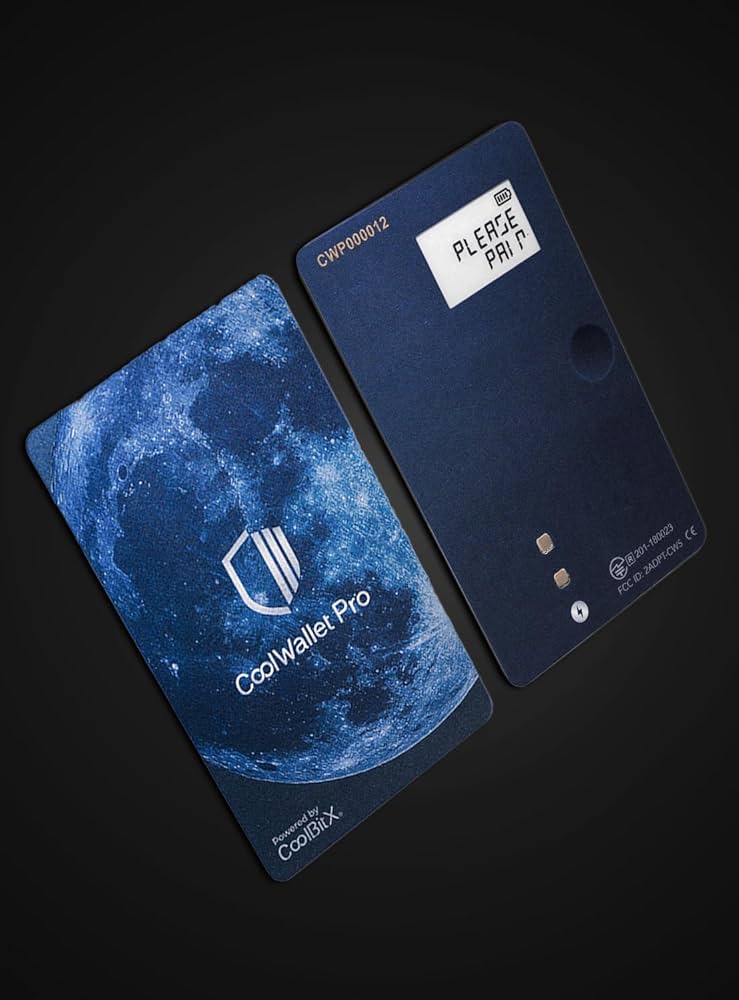
As an Amazon Associate, we may earn from qualifying purchases.
Market Cap vs. Growth Potential
Choosing between established cryptocurrencies and smaller-cap projects requires balancing stability against upside potential. Bitcoin and Ethereum dominate the market by capitalization, offering lower volatility but slower percentage gains. Smaller assets like Solana or Chainlink carry higher risk but can deliver outsized returns during bull cycles. Understanding this trade-off helps investors allocate capital based on their risk tolerance.
The following comparison highlights key metrics for four major cryptocurrencies. These figures illustrate the vast difference in scale between market leaders and mid-cap contenders.
| Coin | Market Cap | Avg Daily Volume | Risk Level |
|---|---|---|---|
| Bitcoin (BTC) | ~$1.2 Trillion | ~$35 Billion | Low |
| Ethereum (ETH) | ~$450 Billion | ~$15 Billion | Low-Medium |
| Solana (SOL) | ~$80 Billion | ~$3 Billion | Medium-High |
| Chainlink (LINK) | ~$10 Billion | ~$500 Million | High |
Larger market caps generally indicate deeper liquidity and wider institutional adoption. Bitcoin’s trillion-dollar valuation provides a buffer against extreme daily swings, making it a safer harbor for conservative portfolios. Ethereum follows a similar pattern, with its smart contract ecosystem anchoring its value proposition. These assets are less likely to vanish overnight but may not double in price as quickly as smaller competitors.
Smaller-cap coins like Solana and Chainlink operate in a more volatile environment. Solana’s high throughput and low fees attract developers and users, driving demand that can outpace Bitcoin’s growth during active market phases. Chainlink’s role as a critical oracle network gives it utility, but its lower market cap means it is more susceptible to sharp corrections. Investors seeking high ROI must accept the possibility of significant drawdowns when holding these assets.
Risk management for 2026
Use this section to make the Best Crypto Coins decision easier to compare in real life, not just on paper. Start with the reader's actual constraint, then separate must-have requirements from details that are merely nice to have. A practical choice should survive normal use, maintenance, timing, and budget. If a recommendation only works in an ideal situation, call that out plainly and give the reader a fallback path.
The simplest way to use this section is to write down the must-have criteria first, then compare each option against those criteria before weighing nice-to-have features.
No comments yet. Be the first to share your thoughts!