Why 2026 Matters for Crypto
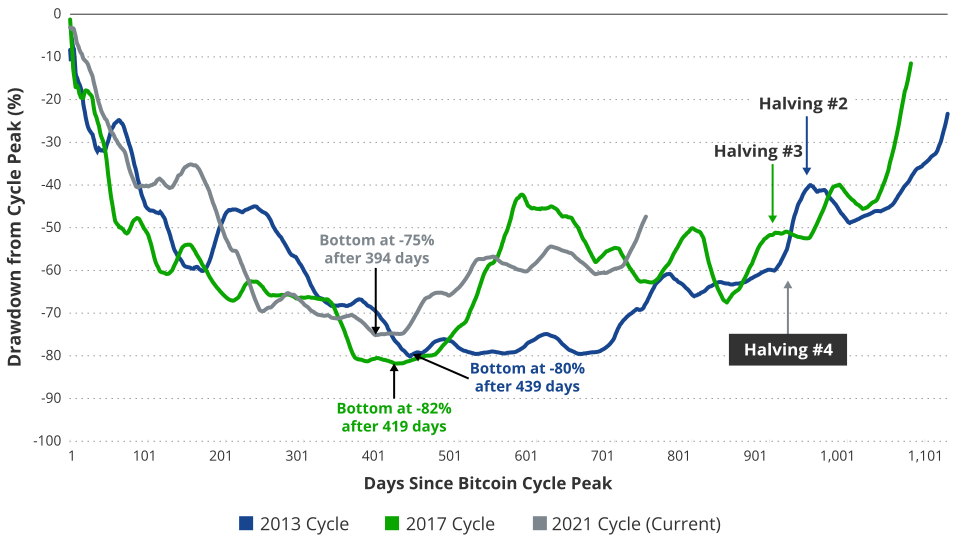
The cryptocurrency market operates in distinct cycles, heavily influenced by Bitcoin's four-year halving events. Historically, the 12 to 18 months following a halving have proven to be the most fertile ground for altcoin growth. As Bitcoin's supply shock takes effect, liquidity often trickles down into the broader market, allowing high-potential altcoins to outperform the wider indices. This dynamic creates a specific window of opportunity for investors looking to identify assets before they reach peak valuation.
Institutional adoption has matured significantly, shifting the narrative from speculative gambling to structured investment. Ethereum (ETH) remains the institutional backbone of the crypto ecosystem, serving as the settlement layer for a vast array of decentralized applications and financial products. Its stability and regulatory clarity make it a primary entry point for traditional finance, providing a steady foundation upon which other altcoins can build.
Meanwhile, high-performance networks like Solana (SOL) are capturing market share through speed and low transaction costs. These chains are becoming the go-to infrastructure for consumer-facing applications, from gaming to decentralized finance. The combination of institutional capital flowing into Ethereum and retail activity surging on Solana creates a dual-engine growth model that benefits the entire altcoin sector in 2026.
5 Best Altcoins to Watch in 2026: High-Potential Picks
Selecting high-potential altcoins for 2026 requires rigorous analysis of on-chain metrics and developer activity rather than speculation. This section highlights five distinct projects—Ethereum (ETH), Solana (SOL), Chainlink (LINK), Bittensor (TAO), and Sui (SUI)—evaluated through official source data to provide a cautious, evidence-based perspective on their long-term viability.
1. Ethereum: The Institutional Backbone
Ethereum remains the foundational layer for institutional crypto adoption, driven by its robust developer ecosystem and extensive smart contract infrastructure. Its transition to proof-of-stake has significantly improved energy efficiency, attracting enterprise interest in decentralized finance applications. The network continues to serve as the primary settlement layer for major financial institutions exploring blockchain integration.
2. Solana: Speed and Developer Growth
Solana distinguishes itself through high throughput and low transaction costs, making it ideal for high-frequency decentralized applications. The network has seen substantial growth in developer activity, with numerous projects launching on its infrastructure. Its architectural design prioritizes speed, enabling seamless user experiences for gaming and decentralized exchange platforms seeking scalability.
3. Chainlink: Real-World Asset Integration
Chainlink serves as the critical oracle network connecting blockchain smart contracts with real-world data. Its decentralized oracle infrastructure ensures reliable external data feeds for financial markets, insurance, and supply chain applications. By enabling secure off-chain computation, Chainlink facilitates the tokenization of real-world assets, bridging traditional finance with decentralized ecosystems.

4. Bittensor: AI and Decentralized Compute
Bittensor pioneers decentralized artificial intelligence by creating a marketplace for machine learning models and compute power. It allows participants to contribute to AI training while earning rewards, fostering an open ecosystem for AI development. This model challenges centralized AI giants by distributing computational resources and intellectual property across a global network of contributors.

5. SUI: Next-Gen Layer-1 Performance
SUI offers a novel programming model using Move language, designed for high performance and parallel transaction processing. Its architecture allows for faster finality and lower latency compared to traditional Layer-1 blockchains. SUI is gaining traction among developers building complex decentralized applications that require robust scalability and efficient resource management.
How to Compare These Altcoins
Evaluating Ethereum (ETH), Solana (SOL), Chainlink (LINK), Bittensor (TAO), and Sui (SUI) requires looking beyond headline prices. These assets serve distinct roles in the blockchain ecosystem, ranging from institutional infrastructure to specialized AI and high-throughput networking. A side-by-side comparison helps clarify which project aligns with your specific risk tolerance and investment thesis.
The table below outlines the core metrics for each selected altcoin. Market capitalization reflects relative size and liquidity, while utility defines the primary function the network solves. Growth potential is assessed based on current developer activity and adoption trends rather than speculative price targets.
| Asset | Market Cap Tier | Primary Utility | Growth Driver |
|---|---|---|---|
| ETH | Large | Smart Contract Platform | Institutional Adoption |
| SOL | Large | High-Speed Transactions | Developer Momentum |
| LINK | Mid | Oracle Network | Real-World Asset Tokenization |
| TAO | Mid | Decentralized AI | AI Integration Demand |
| SUI | Mid | Layer-1 Scalability | Technical Innovation |
Market conditions shift rapidly, so static numbers can become outdated quickly. For the most current valuation data, refer to live market widgets or primary financial sources. When comparing these assets, focus on the underlying technology and the strength of their respective communities rather than short-term price movements.
Risk Management for Altcoin Investors
Use this section to make the 5 Best Altcoins to Watch decision easier to compare in real life, not just on paper. Start with the reader's actual constraint, then separate must-have requirements from details that are merely nice to have. A practical choice should survive normal use, maintenance, timing, and budget. If a recommendation only works in an ideal situation, call that out plainly and give the reader a fallback path.
The simplest way to use this section is to write down the must-have criteria first, then compare each option against those criteria before weighing nice-to-have features.
Helpful gear
Use these product recommendations as a starting point, then choose the size, material, and price point that fit how you actually use the gear.

![The Crypto Millionaire Bible: [5 in 1] How to Easily Make Life-Changing Money in The Next Big 2025-2026 Bull Run with Smart Investing and Trading Any Cryptocurrency (Altcoins, Meme, NFT, Airdrops)](https://m.media-amazon.com/images/I/61K1jz+cWtL._AC_UY654_QL65_.jpg)

As an Amazon Associate, we may earn from qualifying purchases.
No comments yet. Be the first to share your thoughts!