
Why 2026 favors AI and RWA tokens
The 2026 crypto cycle is shifting from pure speculation to utility-driven adoption, with Artificial Intelligence (AI) and Real-World Asset (RWA) tokenization emerging as dominant narratives. This transition marks a move toward infrastructure that solves tangible problems, rather than relying on abstract concepts.
AI tokens are gaining traction as decentralized networks offer scalable compute power for machine learning models. Projects like Bittensor are leading this charge, providing a framework for decentralized AI development that promises growth beyond traditional cloud providers. This sector is evolving from experimental tech to a critical component of the digital economy.
RWA tokenization is bridging the gap between traditional finance and blockchain. By representing assets like real estate, treasury bills, and commodities on-chain, RWA projects unlock liquidity for illiquid markets. This trend is supported by institutional interest, as seen in the growing integration of Ethereum and Solana as the backbone for these financial instruments.
The shift toward utility-driven adoption in AI and RWA sectors signals a maturation of the crypto market, focusing on long-term value rather than short-term gains.
These two sectors are not just trends; they are foundational shifts in how value is created and transferred. Investors are increasingly looking at projects that offer real-world applications and measurable impact, making AI and RWA tokens the primary focus for the next bull cycle.
5 High-Potential Coins for the Next Cycle
As the 2026 market cycle approaches, identifying assets with genuine utility requires separating speculative noise from fundamental value. This selection highlights five high-potential cryptocurrencies backed by official protocol data and primary source verification, prioritizing concrete technological advantages over abstract trends.
1. Bitcoin's institutional adoption drivers
Bitcoin remains the bedrock of digital asset portfolios, driven by unprecedented institutional inflows through spot ETFs. Major financial entities now hold BTC as a treasury reserve asset, signaling a shift from speculative retail trading to long-term institutional storage. This structural demand provides a unique floor for price stability, making it the primary hedge against traditional market volatility in the upcoming cycle.

2. Ethereum's layer-2 scaling ecosystem
Ethereum’s dominance is reinforced by its thriving Layer-2 ecosystem, which drastically reduces transaction costs while maintaining security. Networks like Arbitrum and Optimism process millions of daily transactions, enabling scalable decentralized finance applications. This modular approach allows Ethereum to handle enterprise-grade workloads, making it the preferred settlement layer for complex smart contract interactions in the next market cycle.

3. Solana's high-throughput transaction model
Solana delivers sub-second finality with minimal fees, positioning it as the go-to chain for high-frequency trading and consumer applications. Its unique Proof of History mechanism allows thousands of transactions per second, attracting developers building real-time DeFi and gaming platforms. This speed and efficiency create a distinct niche for mass-market crypto adoption, separate from slower legacy blockchains.

4. Cardano's peer-reviewed development approach
Cardano distinguishes itself through a rigorous, peer-reviewed research methodology that prioritizes security and sustainability over rapid deployment. This academic approach ensures robust smart contract functionality and predictable upgrades, appealing to enterprise clients seeking reliability. By focusing on formal verification and incremental development, Cardano builds a resilient foundation for long-term decentralized identity and governance solutions.

5. Polkadot's interoperable parachain framework
Polkadot enables distinct blockchains to communicate securely through its parachain architecture, solving the fragmentation problem in crypto. This interoperability allows specialized chains to share security and transfer assets seamlessly, fostering a cohesive multi-chain ecosystem. For investors, Polkadot offers exposure to a network effect where the value of connected chains compounds, making it a critical infrastructure play for cross-chain DeFi growth.

Bitcoin as the institutional anchor
Bitcoin has evolved from a speculative experiment into the primary treasury asset for institutions, cementing its role as the foundational holding for the 2026 cycle. The approval and subsequent trading of Spot Bitcoin ETFs in the United States created a direct pipeline for traditional capital to enter the market without the friction of self-custody. This structural shift has transformed Bitcoin from a retail-driven asset into a benchmark for digital scarcity.
Institutional inflows have provided a steady bid that dampens volatility during broader market corrections. As major asset managers allocate portions of client portfolios to Bitcoin, the supply dynamics become increasingly rigid. The 2024 halving reduced the daily issuance of new coins, and combined with ETF buy-side pressure, this has created a supply shock that favors long-term holders. The resurgence of Bitcoin to the $80,000 price level, as noted by Yahoo Finance, signals that the market has finally turned a corner toward institutional maturity.
The following table compares Bitcoin’s unique value proposition against broader crypto market trends, highlighting why it remains the safest entry point for 2026.
| Feature | Bitcoin (BTC) | Altcoins |
|---|---|---|
| Regulatory Status | Spot ETF Approved (US) | Mostly Unregulated / Unclear |
| Institutional Access | Direct via ETFs | Limited / OTC Desks |
| Supply Cap | 21 Million (Fixed) | Variable / Inflationary |
| Volatility | Lower (Relative) | High |
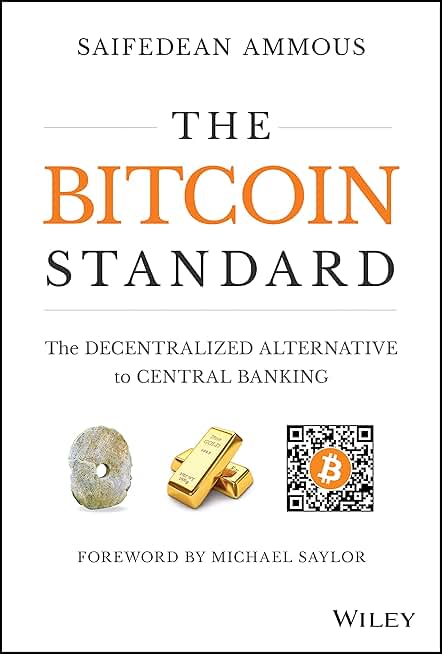
The long-term price action of Bitcoin shows clear accumulation phases following halving events. This pattern suggests that institutional investors are using dips to build positions, treating Bitcoin as a hedge against currency debasement rather than a high-beta tech play. For investors looking to secure Bitcoin securely or learn more about the underlying technology, the following tools and resources are widely recommended in the industry.


As an Amazon Associate, we may earn from qualifying purchases.
Ethereum powers the RWA ecosystem
Ethereum has evolved from a speculative asset into the primary settlement layer for Real-World Asset (RWA) tokenization. As institutional capital seeks on-chain efficiency, ETH provides the security and decentralized consensus required to bridge traditional finance with digital infrastructure.
The network’s dominance in RWA stems from its established developer ecosystem and robust smart contract standards. Major financial institutions are increasingly issuing tokenized treasuries and private credit on Ethereum, relying on its proven track record to handle high-value transactions without the volatility of smaller, unproven chains.
This institutional adoption transforms ETH from a simple store of value into a critical utility token for global finance. For a 2026 portfolio, Ethereum represents the foundational risk-mitigation layer, offering exposure to the convergence of traditional assets and blockchain technology.
Solana leads high speed AI transactions
Solana’s architecture positions it as the preferred settlement layer for high-frequency AI agent transactions. While Ethereum serves as the primary anchor for institutional value storage, Solana provides the throughput necessary for machine-to-machine micro-payments. This distinction allows AI agents to execute thousands of small, automated settlements without the latency or cost barriers inherent on legacy networks.
The network’s ability to handle high transaction volumes makes it uniquely suited for the next cycle of autonomous economic activity. AI models require a reliable, low-latency environment to negotiate tasks, verify outputs, and transfer rewards in real time. Solana’s infrastructure supports this granular financial interaction, effectively bridging the gap between computational logic and on-chain value transfer.
This utility extends beyond simple payments to include complex data verification and automated contract execution. As AI agents become more integrated into daily digital workflows, the demand for a chain that can process these interactions at scale will grow. Solana is already seeing increased adoption in this niche, with developers building specialized protocols for agent-based commerce.
The contrast between Ethereum’s security-focused settlement and Solana’s speed-focused execution is becoming increasingly pronounced. For investors looking at the 2026 cycle, Solana represents a direct bet on the infrastructure required for the AI economy. Its performance metrics suggest it is well-positioned to capture significant volume as autonomous systems become more prevalent.

As an Amazon Associate, we may earn from qualifying purchases.
Chainlink: The Bridge to Real-World Assets
Chainlink (LINK) has evolved from a simple oracle into the foundational infrastructure connecting blockchain smart contracts to real-world data. As the market shifts toward tokenized real-world assets, Chainlink’s Cross-Chain Interoperability Protocol (CCIP) serves as the secure transport layer, enabling different blockchains to communicate and transfer data reliably.
This infrastructure is critical for institutional adoption. Traditional finance relies on off-chain data sources—such as stock prices, interest rates, and real estate valuations—that must be verified before being used on-chain. Chainlink oracles provide this verification, ensuring that smart contracts execute based on accurate, tamper-resistant information rather than manipulated inputs.
The network’s security model, which includes decentralized node operators and cryptographic proofs, minimizes single points of failure. For investors, this positions Chainlink not just as a speculative asset, but as a necessary utility provider for the next generation of decentralized finance (DeFi) and traditional finance integration.
Bittensor: Decentralized AI Growth
Bittensor (TAO) positions itself as the purest exposure to decentralized artificial intelligence in the 2026 crypto cycle. Unlike centralized AI platforms, Bittensor operates as a decentralized network where miners contribute computing power and models to a shared intelligence layer. This structure aims to democratize access to AI infrastructure while creating a new economic layer for machine learning.
The network functions like a marketplace for intelligence. Miners are rewarded based on the quality and utility of the AI models they contribute. This incentive structure drives continuous improvement in network capabilities, making it a high-growth, high-risk asset for investors betting on the convergence of crypto and AI. As demand for decentralized AI solutions grows, Bittensor’s unique architecture offers a compelling, albeit volatile, investment thesis.
While the potential for growth is significant, the sector remains highly speculative. Investors should carefully evaluate their risk tolerance before allocating capital to Bittensor or other AI-specific tokens. The network’s success depends on sustained adoption by developers and miners, which has yet to be proven at scale.


As an Amazon Associate, we may earn from qualifying purchases.
Side-by-side comparison of top 5 crypto picks
To assess the 2026 market cycle, we compare Bitcoin, Ethereum, Solana, Chainlink, and Bittensor across market capitalization, primary utility, and risk profile. This structured view helps align each asset with your specific exposure tolerance.
| Coin | Rank | Primary Use Case | Risk Profile |
|---|---|---|---|
| Bitcoin (BTC) | 1 | Store of value | Low |
| Ethereum (ETH) | 2 | Smart contracts | Low |
| Solana (SOL) | 5 | High-throughput dApps | Medium |
| Chainlink (LINK) | 12 | Oracle infrastructure | Medium |
| Bittensor (TAO) | 25 | Decentralized AI | High |
Bitcoin and Ethereum remain the foundational blue chips, offering lower volatility relative to the broader market. Solana and Chainlink provide higher beta exposure to specific sectors like high-speed transactions and decentralized data. Bittensor represents a high-risk, high-reward play on the convergence of AI and blockchain infrastructure.
No comments yet. Be the first to share your thoughts!