

5 AI Crypto Prediction Tools for 2026
Navigating the volatile crypto landscape in 2026 requires leveraging AI crypto predictions 2026 tools that offer probabilistic insights rather than guarantees. Drawing on official documentation and primary research from firms like Pantera and SVB, this selection highlights five distinct platforms designed to enhance market analysis. The following tools are evaluated based on their ability to process complex data, though users must remember that all AI-generated forecasts remain estimates, not financial advice.
1. QuantConnect AI Crypto Strategy Platform
QuantConnect offers a rigorous backtesting environment where developers deploy machine learning models to analyze crypto markets. This platform allows users to test algorithmic strategies against historical data before risking capital, ensuring that AI predictions are grounded in statistical validity rather than guesswork.

2. TradeSanta Automated Trading Bot
TradeSanta simplifies algorithmic trading by providing a user-friendly interface for setting up automated buy and sell orders based on predefined technical indicators. While it lacks deep custom coding, its accessibility makes it a viable entry point for traders seeking to remove emotional bias from their execution, leveraging AI-driven signals to maintain discipline in volatile markets.

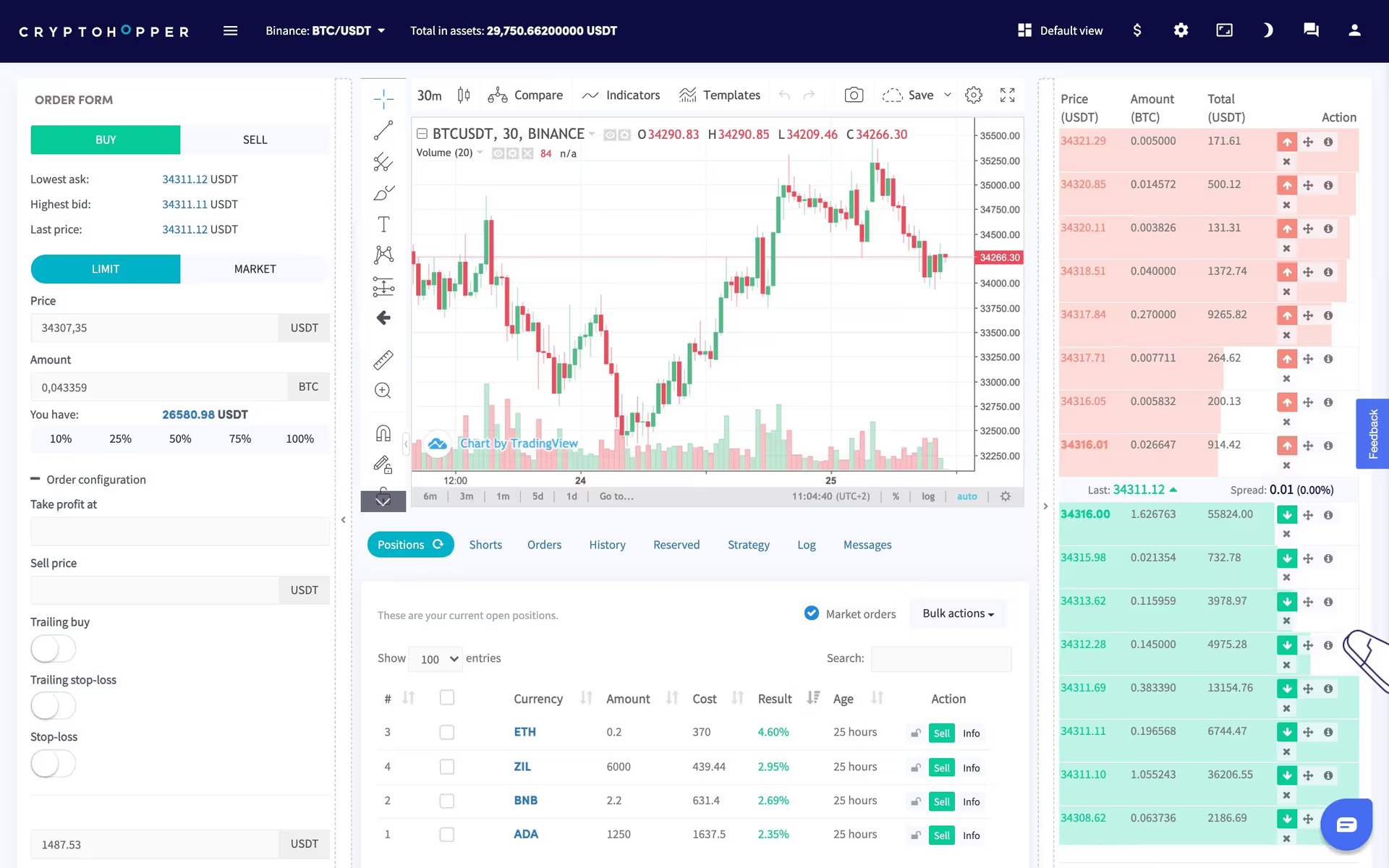
3. Cryptohopper Cloud-Based Signal Scanner
Cryptohopper operates entirely in the cloud, allowing traders to utilize pre-built or custom AI strategies without keeping their devices online. Its signal scanner integrates with multiple exchanges and third-party data providers, enabling users to combine technical analysis with sentiment data to identify potential market movements and execute trades automatically based on real-time conditions.
4. 3Commas Portfolio Management Dashboard
3Commas provides a comprehensive dashboard for managing multiple exchange accounts and optimizing trading strategies through smart terminals. It offers advanced portfolio analytics and automated trade management tools, allowing users to track performance across various AI-driven strategies while maintaining a unified view of their crypto assets and risk exposure in a single interface.
5. Pionex Built-In Trading Grid Bots
Pionex distinguishes itself by integrating trading bots directly into its exchange platform, eliminating the need for external API connections. Its built-in grid trading bots automatically buy low and sell high within a specified price range, providing a systematic approach to capturing volatility in sideways markets while reducing the need for constant manual monitoring or complex algorithmic setup.

How AI changes crypto forecasting
Traditional technical analysis and fundamental research struggle to keep pace with 2026’s market velocity. Human analysts cannot manually process the millions of social signals, on-chain transactions, and macroeconomic indicators that move prices in real time. AI models bridge this gap by ingesting alternative data at scale, identifying patterns that precede market shifts before they become obvious to the naked eye.
These systems evaluate sentiment from news feeds and social media while simultaneously tracking whale movements and liquidity pools. This combination allows for a probabilistic view of future price action rather than a simple guess. As Silicon Valley Bank notes, AI’s role in the 2026 crypto outlook is defined by its ability to process this vast, unstructured data landscape faster than any human team could.
The result is a shift from reactive trading to predictive positioning. By relying on AI crypto predictions 2026 models, investors can filter out noise and focus on high-confidence signals. However, this advantage comes with the responsibility of understanding the underlying data sources. Tools that transparently explain their sentiment scoring and on-chain metrics provide a clearer edge than black-box algorithms that offer no insight into their reasoning.
How AI Crypto Predictions 2026 Models Differ
The reliability of AI crypto predictions 2026 depends less on the brand name and more on the underlying data architecture. Tools generally fall into three distinct categories: those relying on historical price action, those analyzing real-time social sentiment, and those tracking on-chain ledger activity. Understanding these differences is essential for managing risk in a market where AI predictions are probabilistic, not guarantees.
Historical price models use technical analysis algorithms to identify patterns in past trading volumes and price movements. While these tools are effective during stable market trends, they often fail during sudden volatility spikes. Sentiment-based tools, conversely, monitor social media and news feeds to gauge market mood. These can capture sudden shifts in investor psychology but are susceptible to noise and misinformation. On-chain metrics provide a view of wallet movements and liquidity flows, offering a fundamental perspective that price charts alone cannot reveal.
The following comparison highlights how different AI crypto predictions 2026 tools approach data analysis. Pantera Capital notes that 2026 will see a convergence of these data streams, making hybrid models increasingly dominant in the landscape.
| Prediction Method | Primary Data Source | Best For | Key Limitation |
|---|---|---|---|
| Technical Analysis | Historical price & volume | Identifying trends | Poor in high volatility |
| Sentiment Analysis | Social media & news | Capturing market mood | Susceptible to noise |
| On-Chain Analytics | Blockchain ledger data | Fundamental tracking | Complex interpretation |
| Hybrid Models | Combined data streams | Balanced accuracy | Higher computational cost |
Hardware for Running Local AI Models
For advanced users, running local large language models (LLMs) offers a distinct advantage: total control over data privacy and the ability to fine-tune algorithms for specific market signals. While cloud APIs are convenient, they introduce latency and dependency on third-party uptime. To execute complex AI crypto predictions 2026 strategies locally, you need hardware capable of high-throughput inference.
The bottleneck in local AI is almost always memory bandwidth and VRAM. NVIDIA’s RTX 4090 remains the gold standard for consumer-grade inference, offering 24GB of VRAM which allows for running 70B parameter models with quantization. For more serious deployments, dual-GPU setups or workstation-grade cards like the NVIDIA A6000 provide the necessary headroom for larger context windows.
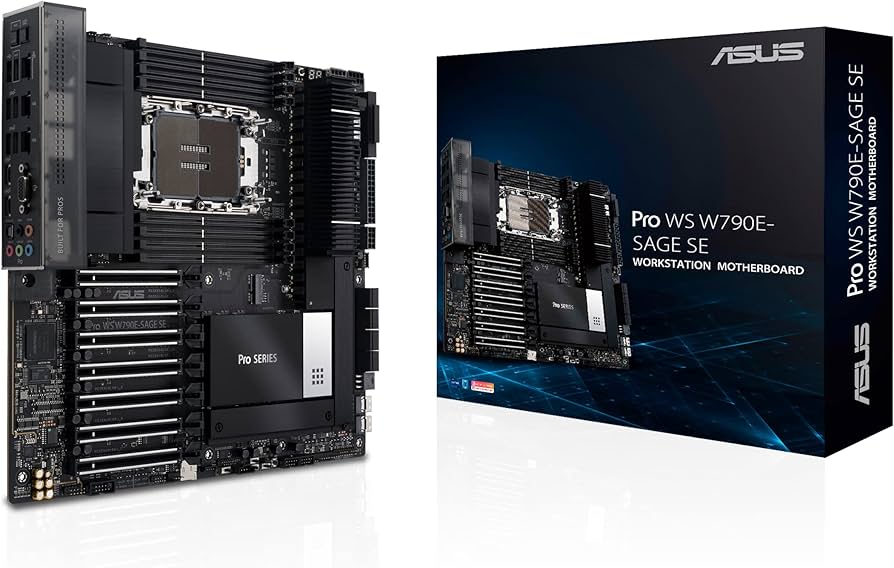
If you are building a dedicated inference rig, consider the following components to ensure stability and speed:


As an Amazon Associate, we may earn from qualifying purchases.
Remember that these tools are probabilistic, not guarantees. The market is influenced by unpredictable human behavior and regulatory shifts that no model can fully capture. Hardware enables speed, but it does not replace the need for rigorous risk management and continuous model validation.
Risks of relying on AI predictions
AI crypto predictions 2026 rely on historical data, which creates inherent blind spots. Markets are not static; they shift with new regulations, technological breakthroughs, and macroeconomic shocks that models have never seen. This phenomenon, known as model drift, occurs when an algorithm trained on past trends fails to adapt to new market realities.
Overfitting is another common pitfall. Developers may tune their models to perfectly match historical price movements, creating a false sense of accuracy. When these models encounter real-time volatility, they often fail because they are optimized for the past, not the future. As noted in industry analyses, these tools are probabilistic guides, not guarantees of profit.
Additionally, AI cannot predict black-swan events or sudden regulatory crackdowns. A single policy change from a major economy can invalidate weeks of algorithmic analysis. Investors must treat these tools as one data point among many, verifying signals with independent research and traditional market analysis.
Frequently asked questions about AI crypto tools
How accurate are AI crypto predictions in 2026? AI models provide probabilistic targets, not guarantees. As noted in recent analyses from Pantera Capital and Silicon Valley Bank, market dynamics are shifting rapidly. Tools can identify trends, but they cannot predict black-swan events or sudden regulatory changes with certainty.
Do these tools cost money? Most AI crypto prediction platforms operate on a freemium model. Basic sentiment analysis and historical data are often free, while real-time signals, advanced backtesting, and API access typically require a monthly subscription. Always verify pricing directly on the provider’s official documentation.
Can I integrate these tools into my existing trading workflow? Yes. Leading platforms offer API integrations and plugins for popular exchanges. This allows you to automate data ingestion and execute trades based on AI-generated signals, though manual oversight remains essential for risk management.
Which is better: AI bots or human analysis? AI excels at processing vast amounts of data and detecting patterns faster than any human. However, human analysts provide context regarding macroeconomic shifts and regulatory news that algorithms may miss. The most effective strategy often combines AI-driven insights with human judgment.
No comments yet. Be the first to share your thoughts!