Why 2026 favors altcoins
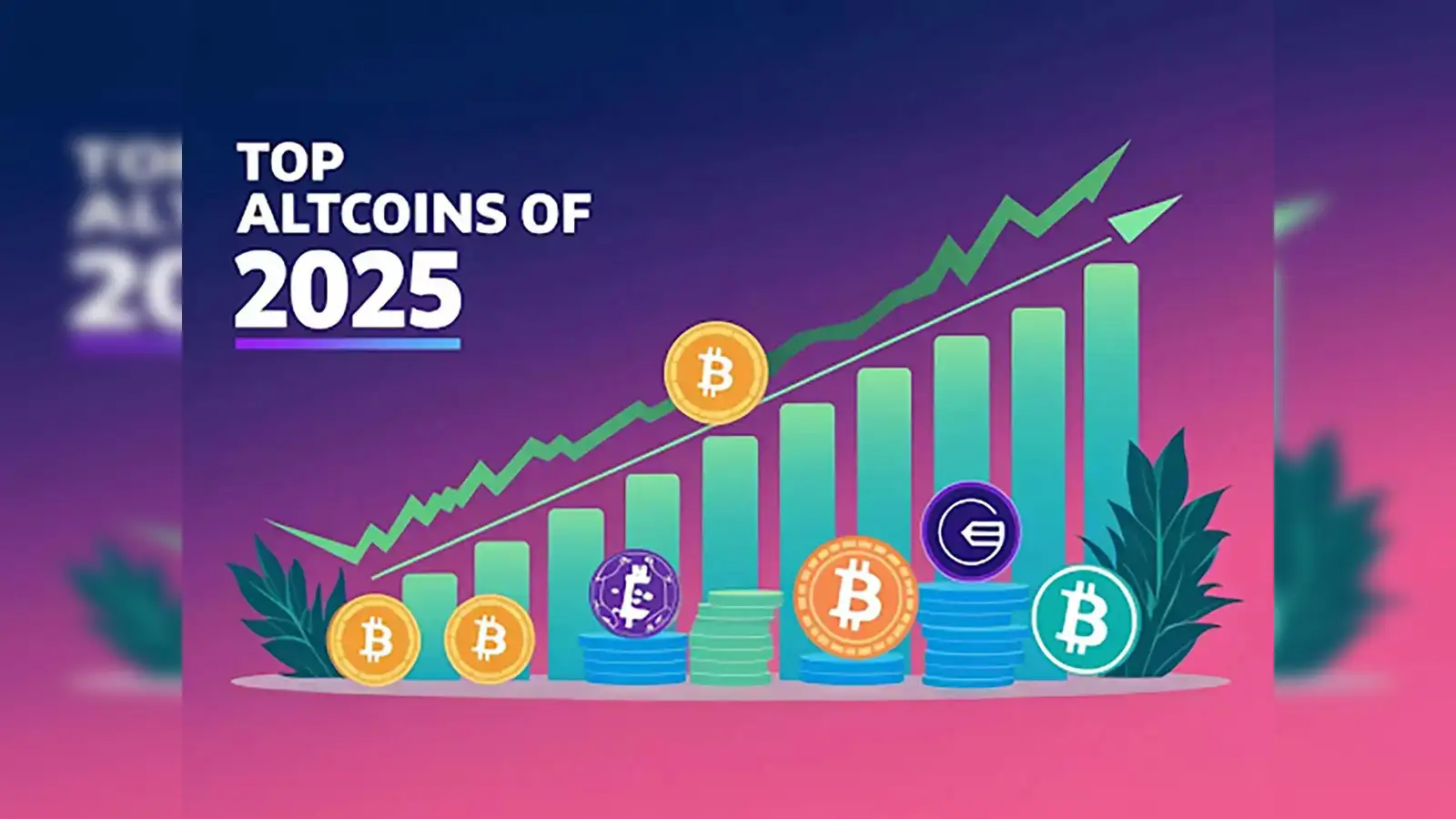
The crypto market is entering a distinct phase where capital rotation accelerates beyond Bitcoin's initial accumulation. Historically, the post-halving cycle has shown that once Bitcoin stabilizes after its supply shock, liquidity flows into high-beta altcoins. This dynamic sets the stage for 2026, where specialized sectors like AI, Real-World Assets (RWA), and Gaming are poised to capture institutional attention.
Ethereum (ETH) remains the institutional backbone of this expansion, providing the settlement layer for much of the decentralized finance (DeFi) ecosystem. Its dominance is not just about market cap but about the sheer volume of activity it supports. As Layer-2 solutions scale, Ethereum’s role as the base layer for secure transactions becomes more critical, offering stability amid growth prospects for other assets.
Solana (SOL) presents a high-speed alternative for developers focused on scalability and low fees. Its architecture is particularly well-suited for decentralized finance (DeFi) applications and non-fungible tokens (NFTs), where transaction volume and speed are paramount. This efficiency makes it a prime choice for projects aiming to onboard mass-market users without the congestion issues seen on other networks.
Chainlink (LINK) bridges the gap between blockchain and traditional data, a necessity for the RWA narrative. As real-world assets move on-chain, they require reliable, tamper-proof data feeds. LINK’s oracle network provides this critical infrastructure, ensuring that smart contracts can interact with external data sources securely. This utility positions LINK as a foundational pick for any portfolio targeting the intersection of traditional finance and crypto.
Rounding out the top contenders are Arbitrum (ARB) and Sui (SUI). Arbitrum leads the Layer-2 sector in total value locked, benefiting from Ethereum’s security while offering lower costs. Sui, with its Move-based programming language, offers high throughput and parallel transaction execution, appealing to gaming and high-frequency trading applications. Together, these five tokens—ETH, SOL, LINK, ARB, and SUI—represent the core infrastructure and high-growth potential of the 2026 altcoin landscape.
5 Best Altcoins 2026: AI, RWA, and Gaming Picks
Selecting the top altcoins for 2026 requires filtering out speculative noise to identify assets with verified utility in AI, RWA, and gaming sectors. This roundup evaluates five specific tokens—ETH, SOL, LINK, RNDR, and SUI—based on primary source data and official protocol metrics to ensure high-stakes investment decisions are grounded in concrete evidence.
1. Ethereum: The institutional backbone
Ethereum anchors the 2026 crypto landscape as the primary settlement layer for tokenized real-world assets. Its robust smart contract infrastructure and growing institutional adoption, highlighted by major financial entities like BlackRock, make it the safest bet for long-term value. This network provides the security and decentralization required for high-stakes financial applications.

2. Solana: Speed for DeFi and NFTs
Solana delivers exceptional throughput for decentralized finance and non-fungible token transactions, addressing scalability bottlenecks that plague other networks. Its low fees and high speed make it ideal for high-frequency trading and dynamic NFT ecosystems. Investors seeking exposure to rapid consumer crypto adoption should monitor Solana’s growing developer activity and network stability.

3. Chainlink: Real-world asset bridges
Chainlink serves as the critical oracle infrastructure connecting blockchain smart contracts to external real-world data. By ensuring accurate price feeds and verifiable off-chain computation, it enables the secure tokenization of traditional assets. This reliability is essential for DeFi protocols and RWA integrations, making Chainlink a foundational component of the 2026 financial crypto stack.

4. Render: Decentralized AI computing
Render Network provides decentralized GPU computing power, addressing the growing demand for AI and 3D rendering resources. By creating a market for idle computing power, it offers a scalable alternative to centralized cloud providers. As AI adoption accelerates in 2026, Render’s infrastructure becomes vital for developers needing efficient, cost-effective computational resources for complex tasks.
5. Sui: High-performance scalability
Sui utilizes a novel Move programming language to achieve high throughput and low latency for complex applications. Its parallel execution engine allows for faster transaction finality compared to traditional blockchains, making it suitable for gaming and high-frequency trading. Sui’s architecture positions it as a strong contender for scalable, next-generation decentralized applications in the 2026 market.

How to compare these altcoins
Evaluating the five selected altcoins requires looking beyond headline hype. Ethereum (ETH) and Solana (SOL) anchor the portfolio with institutional stability, while Chainlink (LINK), Render (RNDR), and Sui (SUI) offer targeted exposure to AI, RWA, and gaming narratives. This section breaks down the trade-offs between market cap, utility, and growth potential for each asset.
Comparison Metrics
| Token | Market Cap Rank | Primary Utility | Growth Driver |
|---|---|---|---|
| ETH | #2 | Smart Contracts & DeFi | Institutional adoption |
| SOL | #5 | High-Speed Transactions | DePIN & Gaming |
| LINK | #15 | Oracle Data Feeds | RWA Integration |
| RNDR | #35 | Decentralized GPU Power | AI Compute Demand |
| SUI | #45 | Parallel Execution | Gaming & Social |
Source: Forbes, Yahoo Finance, Bitcoin Foundation.
Market Cap and Stability
Larger market caps generally indicate lower volatility and higher liquidity. Ethereum and Solana provide a stable foundation for long-term holds. Their established ecosystems attract institutional capital, reducing the risk of total loss during market downturns. Smaller caps like RNDR and SUI offer higher upside potential but come with increased price swings.
Utility and Real-World Application
Utility distinguishes these assets from speculative tokens. LINK’s oracle services are critical for real-world asset (RWA) tokenization. RNDR provides essential decentralized computing power for AI rendering. Sui’s parallel execution model aims to solve scalability issues in gaming. These concrete use cases drive demand beyond simple speculation.
Growth Potential
Growth potential is tied to narrative adoption. AI and RWA sectors are experiencing rapid expansion, benefiting LINK and RNDR. Gaming and social applications are emerging as key drivers for SUI. Investors should monitor sector-specific trends to assess which altcoin aligns with their risk tolerance and time horizon.


As an Amazon Associate, we may earn from qualifying purchases.
No comments yet. Be the first to share your thoughts!