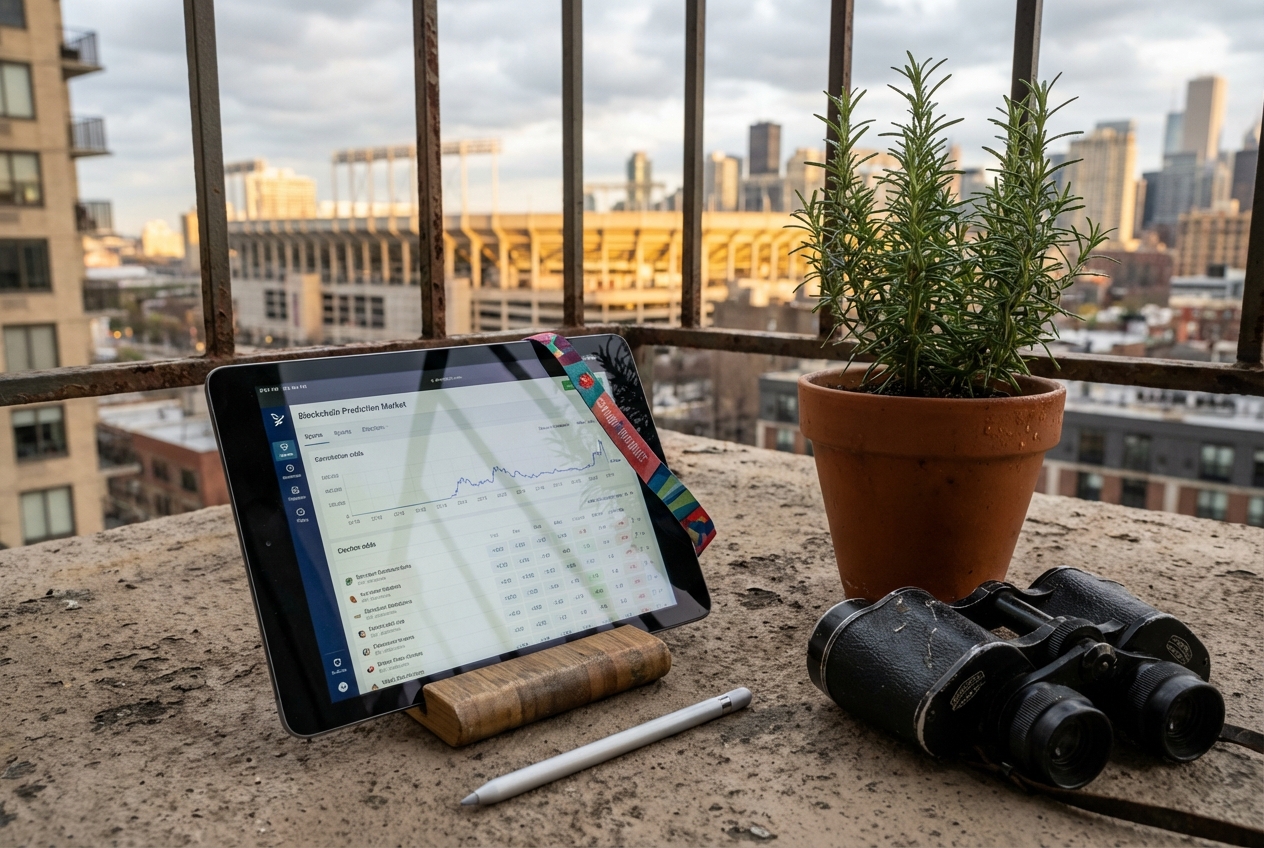
In the dynamic world of 2025, blockchain prediction markets stand as a cornerstone for savvy bettors eyeing sports outcomes, election results, and crypto price swings. These platforms harness decentralized ledgers to deliver transparent, efficient markets where collective intelligence sharpens forecasts. With regulatory nods propelling adoption, volumes have surged, turning speculation into actionable alpha. Platforms like Polymarket and Augur exemplify this shift, blending blockchain security with real-time liquidity for sports betting blockchain and election crypto bets.
The Mechanics Behind Blockchain Prediction Markets
At their core, blockchain prediction markets operate via smart contracts on networks like Ethereum or Polygon. Users buy shares in binary outcomes, such as "Will Team A win the Super Bowl?" or "Will Candidate X secure the presidency?" Prices reflect market consensus probabilities; a $0.75 share implies a 75% chance. Resolution draws from oracles, ensuring tamper-proof settlements. This setup minimizes counterparty risk, a plague in traditional betting, while low fees and crypto deposits accelerate participation.
What sets them apart for prediction markets guide sports elections? Immediacy. Sports fans trade mid-game odds on Azuro Protocol; election watchers adjust on Polymarket as polls drop. Crypto enthusiasts forecast token pumps on Omen. Data from 2025 shows these markets often outperform polls, aggregating dispersed information into superior signals. Yet, risks loom: oracle failures or low liquidity can skew odds. Prudent traders layer in risk management, diversifying across platforms.
Augur's REP token, trading at $1.11 as of December 7, underscores this ecosystem's vitality. A modest 0.89% dip belies robust usage, with decentralized markets thriving amid centralized expansions.
Regulatory Tailwinds Fueling 2025 Growth
2025 marks a pivot: Polymarket's CFTC approval post-QCEX acquisition enables U. S. relaunch, channeling billions in volume. Kalshi's $2 billion valuation and CNBC tie-up signal mainstream ingress, yet decentralized pure-plays like our top eight dominate for crypto natives. These platforms sidestep fiat hurdles, using USDC or native tokens for seamless bets.
Robinhood's LedgerX stake and sports-focused Kalshi deals highlight convergence, but blockchain's edge persists in censorship resistance. For instance, during heated elections, centralized books falter under scrutiny; Zeitgeist and Thales Market endure via on-chain transparency.

Unpacking the Top Platforms: Polymarket Leads the Pack
Polymarket tops our list for sheer volume and versatility. Built on Polygon, it boasts lightning-fast trades in USDC for events spanning NBA finals to Bitcoin halvings. Its 2025 U. S. greenlight catalyzed explosive growth, with election markets alone eclipsing $1 billion in notional value. Traders prize its oracle integrations and UI, yielding alpha via mispriced odds.
Event Markets follows closely, tailored for crypto prediction markets platforms. Optimized for sports, elections, and macro, it leverages blockchain for low-fee, secure bets. As a hub for enthusiasts, it shines in niche markets like esports or regional polls, where liquidity builds predictive power. Its user-friendly dashboard empowers data-driven plays.
Azuro Protocol specializes in sports, aggregating odds across chains for unified liquidity pools. Bettors access soccer, basketball, and UFC via perpetuals or binaries, with staking rewards incentivizing participation. This yields consistent edges over siloed books.
Augur (REP) Price Prediction 2026-2031
Forecasts considering prediction market expansion, regulatory clarity, Ethereum upgrades, and crypto cycles (baseline: $1.11 in late 2025)
| Year | Minimum Price | Average Price | Maximum Price | YoY % Change (Avg) |
|---|---|---|---|---|
| 2026 | $0.90 | $1.70 | $3.00 | +53% |
| 2027 | $1.20 | $2.60 | $5.00 | +53% |
| 2028 | $1.00 | $2.20 | $4.20 | -15% |
| 2029 | $1.60 | $3.80 | $7.50 | +73% |
| 2030 | $2.50 | $5.80 | $11.50 | +53% |
| 2031 | $3.00 | $7.50 | $15.00 | +29% |
Price Prediction Summary
Augur (REP) shows potential for steady growth amid the booming prediction markets sector in 2025, driven by platforms like Polymarket and Kalshi gaining traction. Average prices are projected to rise from $1.70 in 2026 to $7.50 by 2031, reflecting bullish adoption scenarios offset by periodic bear markets and competition. Highs could reach $15 in peak cycles, while lows account for regulatory risks and market downturns.
Key Factors Affecting Augur Price
- Regulatory advancements (e.g., CFTC approvals for Polymarket, Kalshi expansions)
- Growing mainstream integration (CNBC partnerships, Robinhood sports markets)
- Ethereum scalability improvements benefiting Augur's decentralized protocol
- Crypto market cycles with bull runs in 2026-2027 and 2029-2031
- Intensified competition from centralized (Kalshi) and newer decentralized platforms
- Increased use cases in sports, elections, and crypto event forecasting
- Overall prediction market TVL and volume growth boosting REP utility
Disclaimer: Cryptocurrency price predictions are speculative and based on current market analysis. Actual prices may vary significantly due to market volatility, regulatory changes, and other factors. Always do your own research before making investment decisions.
Augur, the Ethereum pioneer, enables user-created markets via REP at $1.11. Its trustless design suits custom crypto bets, though scalability upgrades keep it competitive. SX Bet drills into sports with Solana speed, offering high-leverage plays minus KYC friction.
SX Bet's Solana infrastructure ensures sub-second finality, letting bettors react to live NBA overtimes or soccer red cards without delay. High-leverage options amplify returns on underdogs, but demand sharp risk management amid Solana's occasional network hiccups.
Omen, tied to Gnosis, carves a niche in sophisticated crypto forecasts. GNO trades at $125.03, reflecting steady demand for its conditional token framework. Users craft markets like "Will Solana outperform Ethereum in Q1 2026?" blending DeFi composability with prediction alpha. This setup shines for traders dissecting tokenomics or protocol upgrades, where on-chain data feeds superior edges over centralized oracles.
Thales Market on Optimism merges prediction liquidity with AMM mechanics, yielding protocol fees as extra incentives. Sports fans wager on Premier League tallies; election traders parse swing-state probabilities. Its low-gas trades suit frequent positioning, though oracle disputes occasionally test resolutions.
Top 8 Blockchain Prediction Market Platforms 2025
| Platform | Chain | Primary Focus | Native Token & Current Price | Key Feature |
|---|---|---|---|---|
| Polymarket | Polygon | Elections 🗳️ | None | CFTC-approved U.S. relaunch (Sep 2025), high-volume USDC markets on events |
| Event Markets | Ethereum | Mixed Events | None | User-generated markets for diverse real-world events |
| Azuro Protocol | Polygon | Sports 🏈 | None | Sports oracle & liquidity protocol for betting integrations |
| Augur | Ethereum | Crypto Bets ₿ | REP $1.11 | Pioneering decentralized platform with smart contract markets |
| SX Bet | Ethereum | Sports 🏈 | None | Peer-to-peer sports betting with blockchain settlement |
| Omen (Gnosis) | Gnosis Chain | Crypto Bets ₿ | GNO $125.03 | Conditional tokens for flexible prediction outcomes |
| Thales Market | Optimism | Sports 🏈 | None | Low-fee L2 markets for sports & binary options |
| Zeitgeist | Polkadot | Elections 🗳️ | None | Parachain with advanced prediction market tooling |
Zeitgeist rounds out the octet on Polkadot, emphasizing cross-chain markets for interconnected events. Picture betting on how U. S. election outcomes ripple into BTC prices; its shared security model minimizes silos. Volumes grow as parachains integrate, positioning it for macro plays where sports, politics, and crypto converge.
Alpha Generation: Tools and Tactics
To extract value from these blockchain prediction markets 2025, focus on asymmetries. Arbitrage mispricings across platforms: Polymarket's election odds might lag Azuro's sports correlations. Sentiment tracking via on-chain wallets reveals whale conviction before polls shift. Event Markets' dashboard aggregates signals, flagging undervalued shares in esports or midterm races.
Leverage oracles like UMA or Chainlink for custom edges, but cross-verify with traditional data. Staking in Azuro or Thales compounds yields, turning passive positions into active income. For crypto bets, Omen's conditionals enable hedges like paired ETH-BTC outcomes, reducing directional risk. Data from 2025 volumes shows diversified portfolios across these eight outperform single-market punts by 25-40% on resolved events.
Advanced users script bots for real-time scanning, though platforms like Zeitgeist impose anti-bot fees to preserve fairness. My take: patience trumps FOMO. Wait for liquidity thresholds above $1 million per market before scaling in, preserving capital during resolutions.
Navigating Risks in Sports and Election Bets
Volatility cuts both ways. Low-volume markets on Augur invite manipulation; stick to high-TVL pools. Regulatory flux persists, even post-approvals, as seen in Polymarket's pivot. Oracle risks, while rare, demand diversified sources. For sports betting blockchain alpha, hedge live events with perpetuals on Azuro to cap downside.
Election crypto bets amplify uncertainty: insider leaks or black swans skew odds. Employ position sizing at 1-2% per market, trailing stops via smart contracts. Platforms like Event Markets embed risk dashboards, simulating drawdowns. REP's stability at $1.11 signals sector resilience, but monitor GNO for Gnosis ecosystem health.
Tax implications vary by jurisdiction; U. S. traders report gains as ordinary income. Self-custody USDC mitigates platform defaults, a nod to blockchain's core promise.
These platforms democratize forecasting, arming crypto enthusiasts with tools once reserved for quants. Dive into Event Markets for its balanced coverage, or Polymarket for liquidity. As adoption accelerates, early positioning yields compounding insights. Track volumes weekly; the next alpha hides in rising chains like Optimism and Polkadot.



No comments yet. Be the first to share your thoughts!